
Does Organisational Control Really Require More Oversight?
Most organisations respond to complexity in familiar ways. More reporting. More approvals. More controls. More governance. More management visibility. When something goes wrong, the instinct is often to increase oversight. It seems logical: If leaders can see more of what…
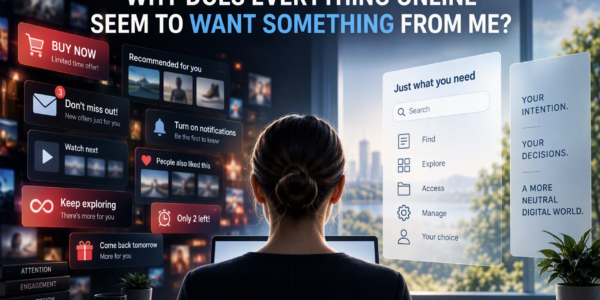
Why Does Everything Online Seem to Want Something From Me?
Open almost any digital service and something is competing for your attention. Click this. Watch this. Buy this. Read this next. Stay a little longer. Come back tomorrow. We have become so familiar with these prompts that they barely register…
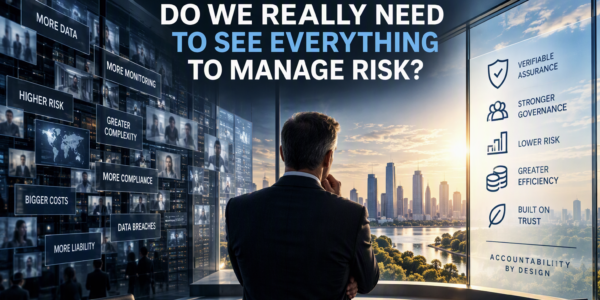
Do We Really Need to See Everything to Manage Risk?
Risk management has traditionally depended on information. Collect more. Monitor more. Retain more. Analyse more. Identify patterns. Spot anomalies. Create audit trails. The logic seems obvious: The more an organisation can see, the better equipped it is to manage risk….
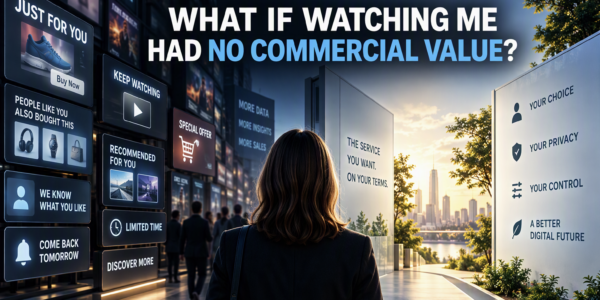
What If Watching Me Had No Commercial Value?
Most organisations don’t set out to create surveillance systems. They set out to understand customers. What do people want? What are they interested in? What will they buy? What will make them stay? What will bring them back? Individually, each…
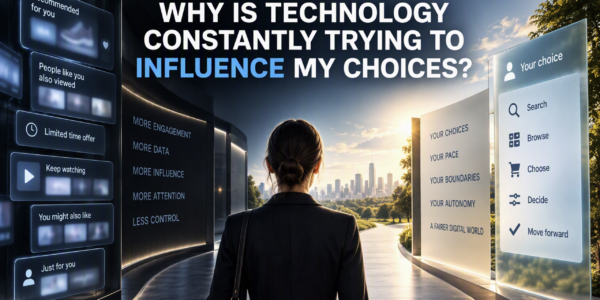
Why Is Technology Constantly Trying to Influence My Choices?
Think about an ordinary day online. You open an app and something has already been selected for you. You visit a website and something is recommended. You read an article and another one is waiting. You watch something and the…
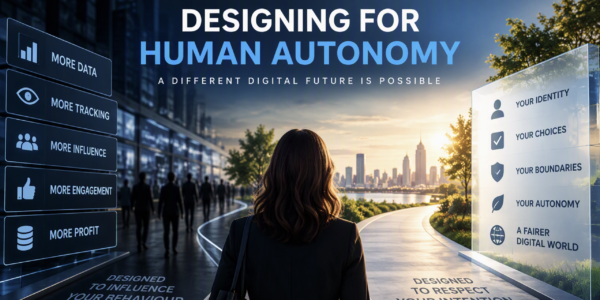
Designing for Human Autonomy
Most digital systems are designed around the needs of the organisation. They collect information, observe behaviour, measure engagement, create profiles and use what they learn to influence what happens next. Volume II asks what changes when the individual, rather than…
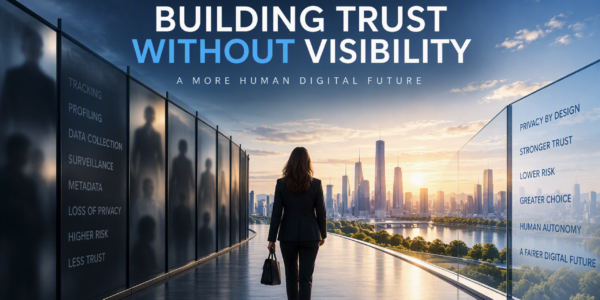
Building Trust Without Visibility
Most digital services are built on an assumption that the provider needs to see the customer, their activity, or information about the interaction in order to provide the service. Volume I asks what becomes possible when that assumption is removed….

What If Knowing Less About Me Was Better for Business?
For decades, digital business has been moving in one direction. Know more about the customer. Collect more data. Build richer profiles. Observe more behaviour. Use that knowledge to predict what people might do next. The assumption is straightforward: The more…
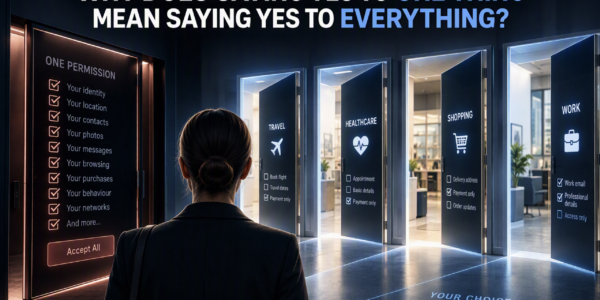
Why Does Saying Yes to One Thing Mean Saying Yes to Everything?
Think about how permissions work in everyday digital life. You download an app. You create an account. You accept the terms. You enable a feature. And somewhere along the way, a relatively simple decision becomes permission for an organisation to…

The Vision Building a Third-Party Ecosystem on ICCA
Most digital platforms think about ecosystems in terms of access. They provide APIs, developer accounts, application marketplaces and integration frameworks. Third parties are invited inside the platform and are progressively granted access to users, identities, data and behavioural information. All…

Why Should I Have to Trust Your Promises?
Every organisation makes promises. We will protect your data. We will respect your privacy. We will only use your information for the purposes described. We will not share it without permission. We invest heavily in policies, governance, compliance and security…

Why Should My Activity Reveal More About Me Than the Interaction Requires?
We leave information behind almost everywhere we go online. Not necessarily because we deliberately provide it, but because our interactions themselves create information. When we connected. Where we connected from. What we interacted with. How often we returned. What happened…
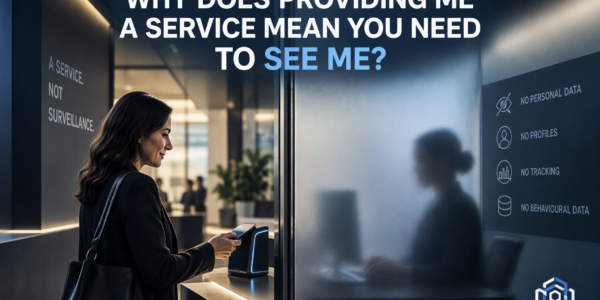
Why Does Providing Me a Service Mean You Need to See Me?
Think about how many organisations you interact with every day. Your bank. Your mobile provider. Your supermarket. Your streaming service. Your airline. Your social platforms. In the physical world, receiving a service does not always require the provider to understand…
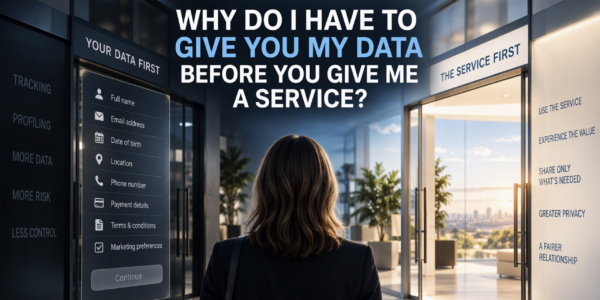
Why Do I Have to Give You My Data Before You Give Me a Service?
Think about the last time you tried a new digital service. Before you had experienced its value, you were probably asked for something. Your name. Your email address. Your date of birth. Perhaps your location, telephone number or payment details….
Why Do We Assume Organisations Need To See Everything?
Modern organisations are built around visibility. We monitor. We analyse. We track. We measure. We justify these activities as necessary for security, compliance, operations and customer service. But what if we’ve mistaken visibility for necessity? For decades, digital systems have…
Why Does Every Digital Interaction Leave a Trail?
Every time we interact online, a record is created. A login. A purchase. A search. A message. A click. Most of us accept this as a normal part of digital life. But why? Why should every interaction generate a permanent…
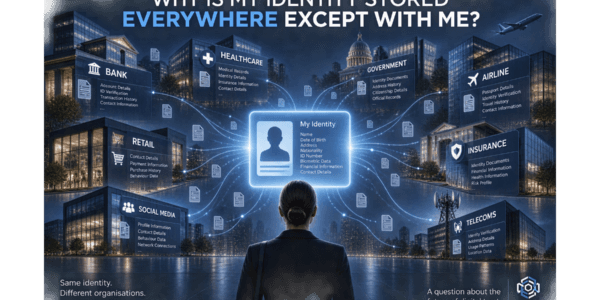
Why Is My Identity Stored Everywhere Except With Me?
Every few weeks another organisation asks me to prove who I am. My bank knows. My employer knows. My insurer knows. My airline knows. Government departments know. Countless websites know. The obvious question is: Why is my identity stored in…